
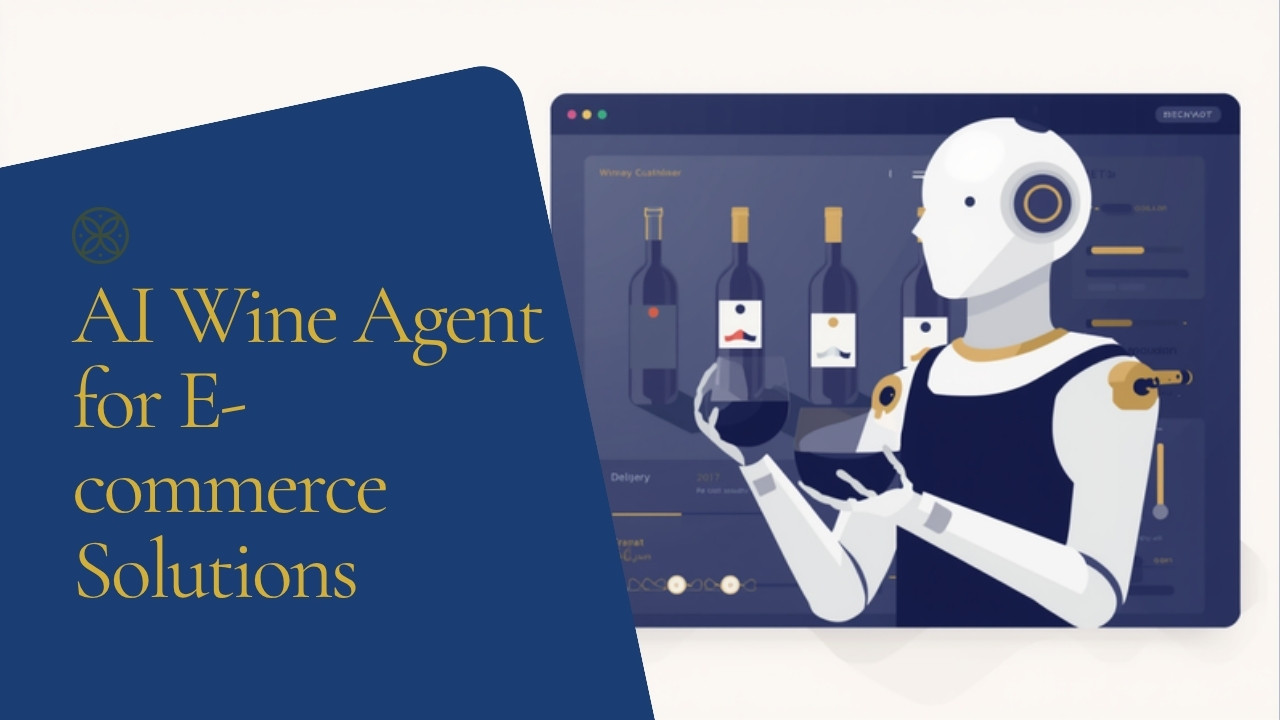

Imagine a tireless sommelier available 24 hours a day, seven days a week, capable of guiding each customer to the perfect bottle — all without any human intervention. That is exactly what the new generation of AI agents promises for wine and spirits merchants. And in 2026, this is no longer a futuristic dream: it is already happening.
A New Milestone: AI Wine Agents Are Live in Shops
Earlier this year, sommelier.bot announced the launch of what it calls the industry’s most advanced AI Wine Agent, already deployed across more than 40 wine and spirits e-commerce platforms and serving over 100,000 end consumers. Unlike classic chatbots — which can only answer a handful of predefined questions — this type of AI agent is capable of understanding natural language, navigating a product catalogue, making personalised recommendations, and even completing a purchase transaction autonomously.
This is a significant step forward. Until recently, AI tools in wine e-commerce were mostly limited to search filters, automated email campaigns, or basic recommendation widgets. The new class of “AI agents” goes much further: they can handle multi-turn conversations, remember preferences, and adapt their responses based on each customer’s history and tastes.
Chatbot vs. AI Agent: What Is the Real Difference?
This is a question many professionals ask, and the confusion is understandable. Here is a simple way to think about it:
- A chatbot follows a script. It answers “What are your opening hours?” or “Where is my order?” based on pre-written rules.
- An AI agent reasons and acts. It can say “Based on the lamb dish you mentioned, here are three bottles from the Rhône Valley under €25 — would you like me to add one to your cart?”
The agent does not just inform; it sells. And crucially, it does so in a way that feels personal rather than mechanical.
Three Practical Use Cases for Wine Merchants
1. Food and Wine Pairing Assistance
A customer arrives on your website unsure what to serve at a dinner party. An AI agent can ask a few questions about the menu and the budget, then propose a curated selection. This kind of interactive guidance used to require a trained sommelier on call. Today, it can run automatically on any e-commerce site — even those with no technical team.
2. Wine Club Member Retention
Wine clubs are a major revenue driver for many wineries and merchants, but churn is a constant challenge. AI agents can proactively reach out to members who have not ordered recently, offer personalised suggestions based on their past purchases, and re-engage them before they cancel. Tools like Klaviyo combined with AI segmentation are already making this accessible at a relatively low cost.
3. 24/7 Customer Service Without Extra Headcount
One of the most immediate wins is simply deflecting repetitive customer queries — shipping times, return policies, stock availability — so that your team can focus on higher-value tasks. For small wine merchants and négociants with limited staff, this alone can represent a significant time saving.
Do You Need Technical Skills to Get Started?
This is the good news. Most of the tools emerging in this space are designed as no-code or low-code solutions, meaning you do not need to hire a developer. Platforms like sommelier.bot, WineSpeak.ai, and similar tools typically integrate directly into your existing e-commerce platform (Shopify, WooCommerce, or a custom site) via a simple embed code or plugin.
The key is to start small. Pick one use case — say, a product recommendation assistant on your homepage — and test it for a month. Measure conversion rate, average basket size, and customer satisfaction. Only then consider expanding to other areas of your business.
What to Watch Out For
AI agents are powerful, but they are not infallible. A few things to keep in mind:
- Data quality matters: The agent is only as good as the product catalogue you feed it. Incomplete descriptions, missing tasting notes, or outdated stock levels will lead to poor recommendations.
- Tone of voice: Make sure the agent’s language matches your brand. A fine wine merchant and a craft beer shop should not sound the same.
- Human escalation: Always have a clear path for customers to reach a human when needed. AI should assist, not replace, human relationships in a sector where trust is everything.
The Bottom Line
AI agents represent one of the most concrete and immediately actionable opportunities for wine and spirits merchants looking to improve their online sales — without adding headcount or breaking the budget. The technology is mature, the tools are accessible, and the early adopters are already seeing results.
If you are curious about where to start, etoh.io offers resources, tools, and training specifically designed for wine, beer, and spirits professionals navigating the world of AI and automation. Come explore what is possible for your business.